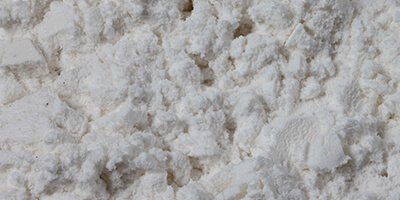
It is a water-soluble, transparent, colourless, crystalline and Granular form, which is essential for oxidation reaction, carbohydrate metabolism, sugar usage and formation of growth-promoting compounds like Auxins.
SPECIFICATION:
S. No.
Composition
Content (%)
1.
Zinc (as Zn). percent by weight
Minimum 33.0000
2.
Sulphate Sulphur (as S) percent by weight
Minimum: 15.0000
3.
Matter-insoluble in water, percent by weight
Maximum 1.0000
4.
Iron (as Fe), percent by weight
Maximum 1.0000
5.
Cadmium (as Cd), percent by weight
Maximum 0.0025
6.
Arsenic (as As), percent by weight
Maximum 0.0100
7.
pH (5% solution) not less than
4.0000
8.
Free Flowing powder form
Features and Benefits:
Zinc is an essential component of various enzymes systems for energy production, protein synthesis and growth regulation
Zinc has the most obvious effect on Photosynthesis
All flowering plants require Zinc for flower production, fruit set and seed set.
RECOMMENDATION:
Paddy and wheat: 5 kg/ acre during planting/ sowing (or) after 15 days
It is a water-soluble, transparent, colourless, crystalline and Granular form, which is essential for oxidation reaction, carbohydrate metabolism, sugar usage and formation of growth-promoting compounds like Auxins.
SPECIFICATION:
S. No.
Composition
Content (%)
1.
Zinc (as Zn). percent by weight
Minimum 33.0000
2.
Sulphate Sulphur (as S) percent by weight
Minimum: 15.0000
3.
Matter-insoluble in water, percent by weight
Maximum 1.0000
4.
Iron (as Fe), percent by weight
Maximum 1.0000
5.
Cadmium (as Cd), percent by weight
Maximum 0.0025
6.
Arsenic (as As), percent by weight
Maximum 0.0100
7.
pH (5% solution) not less than
4.0000
8.
Free Flowing powder form
Features and Benefits:
Zinc is an essential component of various enzymes systems for energy production, protein synthesis and growth regulation
Zinc has the most obvious effect on Photosynthesis
All flowering plants require Zinc for flower production, fruit set and seed set.
RECOMMENDATION:
Paddy and wheat: 5 kg/ acre during planting/ sowing (or) after 15 days
Click on the Edit Content button to edit/add the content.
Packing – 50 kg HDPE Bag
Gypsum : Phospho Gypsum – Industrial Grade
Description:
Gypsum is a by -product of a green star phosphate manufacturing plant.
appliCATION:
Agricultural Use:
Gypsum removes salt and alkalinity from the soil, more or less acting as a fertilizer.
Industrial Use:
Gypsum is used to make gypsum board. In the cement industry, gypsum is used to produce lime. Gypsum is also used to make alabaster.
SPECIFICATION:
White crystalline powder
Gypsum is an ideal soil conditioner, rich in calcium (23%) and sulfur (18%). CaSO4, 2H2O 90%, T-P2O5 0.50%
50 Kg HDPE bag packing
ALF-96 (Aluminium Fluoride)
Description:
Aluminum fluoride (AlF3) is an inorganic compound primarily used in the production of aluminum. This colorless solid can be produced synthetically but also occurs naturally.
Used in the production of aluminum metal. Aluminum fluoride is an important additive for the production of aluminum by electrolysis. With Cryolite, the melting point is reduced to less than 1000 ° C, and the solution conductive rate is improved. The aluminum oxide is dissolved in this melted salt, which is electrolyzed to obtain a volume metal. Aluminum fluoride, when combined with zirconium fluoride, is an ingredient in the production of fluoroaluminate glass. It is also used to inhibit fermentation. This is a sputtering target for producing low index films.
Greenstar’s AlF3 process involves the reaction of aluminum hydroxide with hydrofluorosilicic acid. It is then filtered to remove the silicon, and the high-purity aluminum fluoride is then crystallized and dried. Greenstar’s Aluminium Fluoride is a trusted feedstock for leading aluminium manufacturers in India and across the globe, including Hindalco, Duval, Stellar and Foundry Services.
SPECIFICATION:
Property
Unit
Standard purity
High purity
Purity as Alf3
% ww
96.0 Min
96.0 Min
Loss on Ignition
% ww
1.0 Max
1.0 Max
Silica as SiO2
% ww
0.12 Max
0.04 Max
Phosphates as P2O5
% w/w
0.015 Max
0.015 Max
Iron as Fe2O3
% ww
0.015 Max
0.015 Max
Bulk Density
GM/CC
0.70 Min
0.70 Min
50 Kg HDPE bag packing
Silica
Description:
Silicon, also known as silicon dioxide (from the Latin silex), is a chemical compound with the chemical formula SiO2. It has been known since ancient times.
Silicon occurs most commonly in nature in the form of quartz, and is also present in a variety of living organisms. Silicon is one of the most complex and abundant groups of materials, occurring as multiple minerals and also produced synthetically.
In the chemical industry, silica is also used as a filter aid in phosphoric acid plants to improve recovery efficiency. The Greenstar process involves the reaction of aluminum hydroxide with hydrofluorosilicic acid followed by filtration to recover silica.
Its main clients are the Vedanta Resources group and Coromandel companies.
SPECIFICATION:
Property
Unit
Standard purity
Product colour
White
Bulk Density
g/cc
0.50 Max
Free Moisture
% WW
40-50%
Analysis on Dry basis
Bulk Density
% WW
80% Min
Bulk Density
% WW
5 % Max
Packing – 50 kg HDPE Bag
TFL ACL : Ammonium Chloride (N 25%)
APPLICATION:
Based on the recommended fertilizer schedule, ACL requirements are calculated and applied to all crops as primary and secondary fertilizers.
Description:
Ammonium chloride contains 25% nitrogen. In addition to nitrogen, the chlorine contained in ammonium chloride is also an important micronutrient.
Improves root formation and guarantees high quality outlets. The whole nitrogen exists in the form of ammunition. NH4 is fixed by the clay and humic complexes in the soil so that no ammoniacal nitrogen is lost during leaching.
When applied to the field, it releases the nitrogen needed by the crop.
When ammonium chloride is used as a base or top dressing for cultivated crops, nitrogen losses are significantly reduced.
As a result, more nitrogen is used by the crop, thereby improving fertilizer use efficiency. Ammonium Chloride fertilizer application is recommended for saline and alkaline soils.
It is also a suitable Nitrogenous fertilizer for application in low-lying areas where paddy and other crops are cultivated by farmers. The chlorine in ammonium chloride gives it resistance to certain pests and diseases.
Ammonium chloride is less hygroscopic than other fertilizers, which gives the fertilizer a much longer shelf life. Radical ammonium chloride releases phosphorus, potassium, magnesium, sin, and iron. From the ground.
SPECIFICATION:
S. No.
Composition
Content
1.
Moisture per cent by weight
Maximum 2.0%
2.
Ammoniacal nitrogen per cent by weight,
Minimum 25.0%
3.
Chloride other than ammonium chloride (as NaCI) per cent by weight, (on dry basis)
Maximum 2.0%
50 gm, 100 gm, 200 gm & 500 gm packs
ZINC CHELATED 12% (EDTA)
Description:
ZINC EDTA is a particularly versatile product that can be used on all types of crops and soils.
SPECIFICATION:
S. No.
Composition
Content
1.
Appearance – Free Flowing crystalline or powder or tablet
2.
Zinc content (expressed as Zn) percent by weight minimum in the form of Zn-EDTA)
12.0000
3.
pH (5% Solution)
6.0 - 6.5
4.
Lead (as Pb) percent by weight
(Maximum) 0.0030
5.
Cadmium (as Cd) percent by weight
(Maximum) 0.0025
6.
Arsenic (as As) percent by weight
(Maximum) 0.0100
Features and Benefits:
Zinc deficiency can be easily corrected with ZEN.
In chelated form, it not only ensures optimum zinc utilization, but also complete availability of zinc for plants without fixation in the soil.
This increases the efficiency of using the applied NPK. SPIC Zen is easily absorbed by plants in all weather conditions and on any soil and is completely soluble in water.
Ideal for fertigation.
RECOMMENDATION:
Fertigation: 500 gm/ acre
Foliar application: 100 gm/ acre for paddy, sugarcane and all crops.
Click on the Edit Content button to edit/add the content.
Click on the Edit Content button to edit/add the content.
Click on the Edit Content button to edit/add the content.
Click on the Edit Content button to edit/add the content.
Click on the Edit Content button to edit/add the content.
Click on the Edit Content button to edit/add the content.